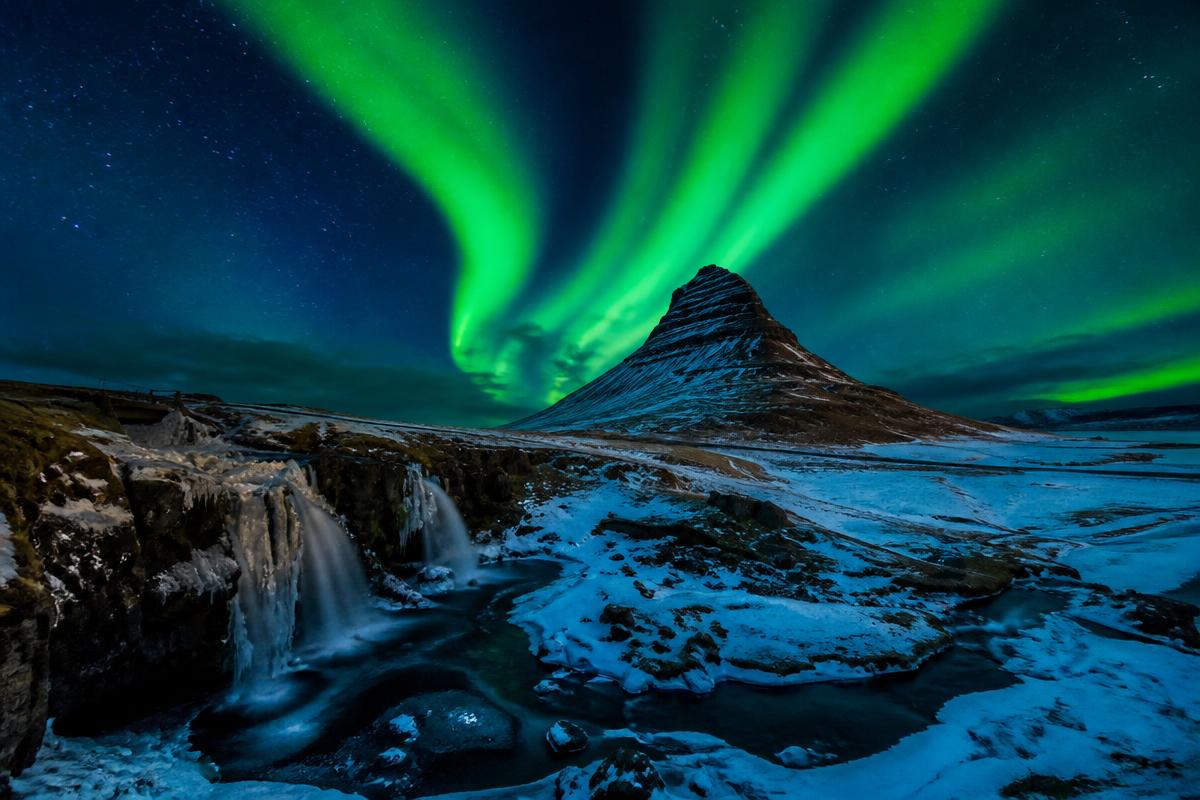
Aurora Oval
Iceland
Ring-road self-drive plus aurora chasing — glaciers and black-sand beaches by day, volcanoes and lights by night.
View ring-road itinerary
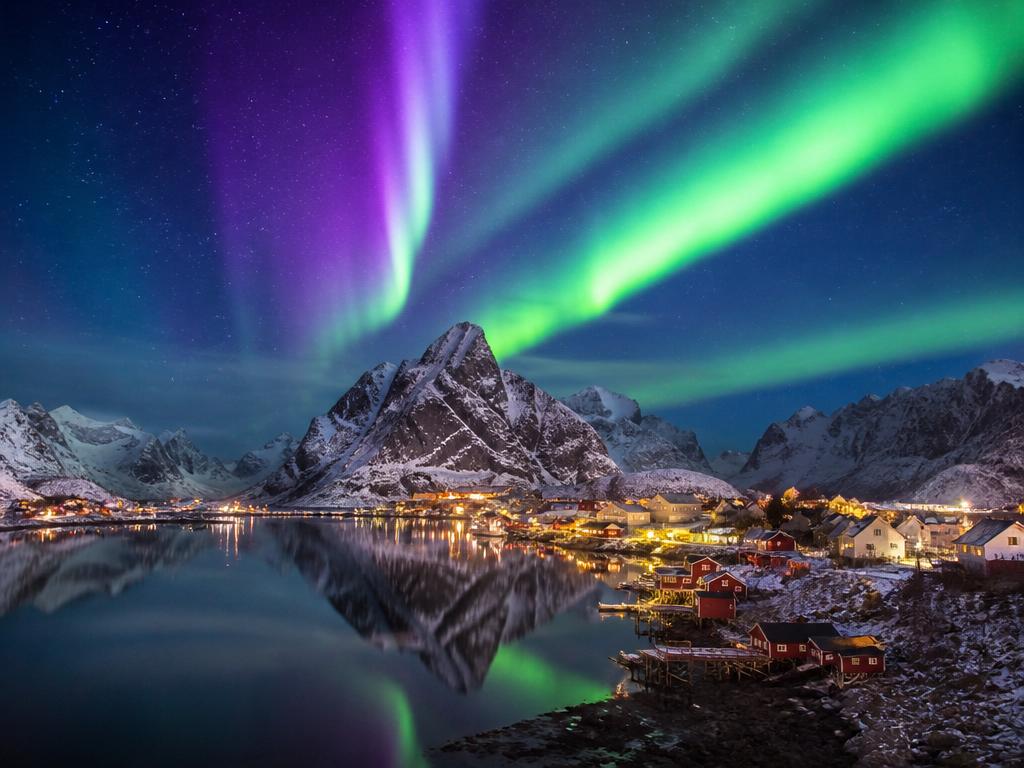
Chasing the Northern Lights
A Nordic aurora travel guide covering Iceland, Norway, Finland, Sweden, Greenland and the Faroe Islands — from the science to destinations, from best seasons to curated trips.
Best season
Sept – April
Best hours
21:00 – 02:00
KP index
≥ 3 to observe
Probability
> 80% over 3 nights
The Aurora Borealis is the light released when charged particles from the Sun collide with oxygen and nitrogen atoms in the upper atmosphere. The most common green comes from oxygen at 100–300 km altitude; violet and blue appear higher up or during strong outbursts.
The aurora concentrates inside a narrow ring around the magnetic pole — the Aurora Oval. The Nordic countries, Greenland and northern Alaska/Canada sit right on this ring, which is why they are the world's most reliable places to see the lights.
Important: the aurora is a natural phenomenon — no operator can guarantee a sighting. But the right season, latitude, length of stay and weather tracking can drastically improve your chances.
Where
Six Nordic destinations sitting on the Aurora Oval — visit one in depth, or combine two or three.
Ring-road self-drive plus aurora chasing — glaciers and black-sand beaches by day, volcanoes and lights by night.
View ring-road itinerary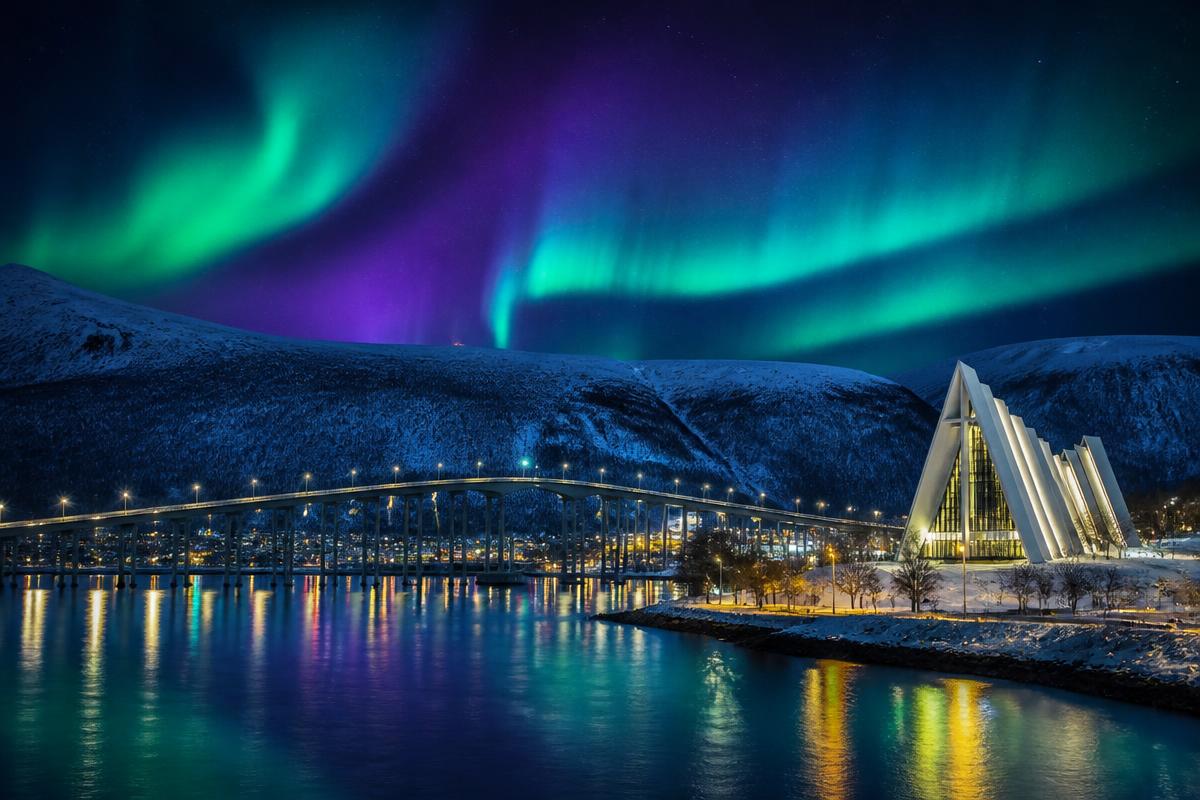
The aurora capital: fjord backdrop, extremely high probability, whale watching and dog sledding in season.
Enquire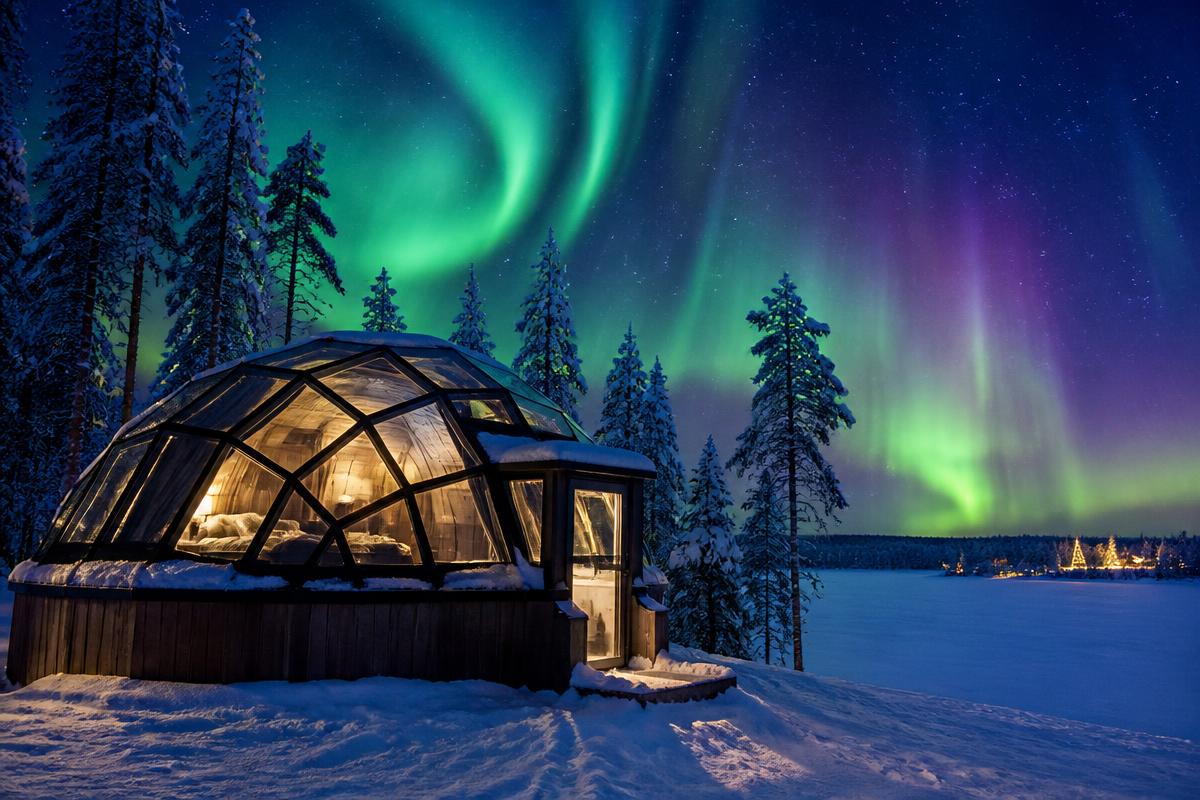
Santa Claus Village and glass igloos — watch the aurora from your bed. Perfect for families.
Enquire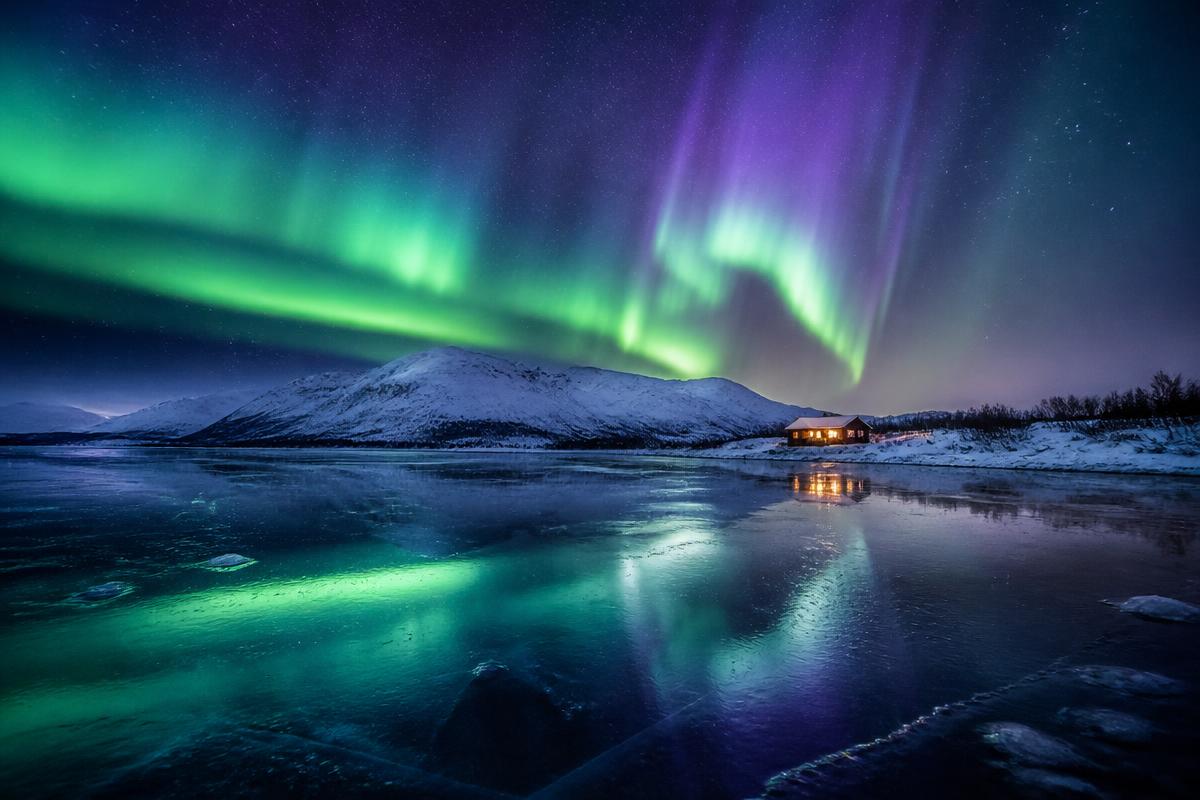
One of the highest-probability aurora towns on earth, thanks to the 'Blue Hole' microclimate keeping skies clear.
Enquire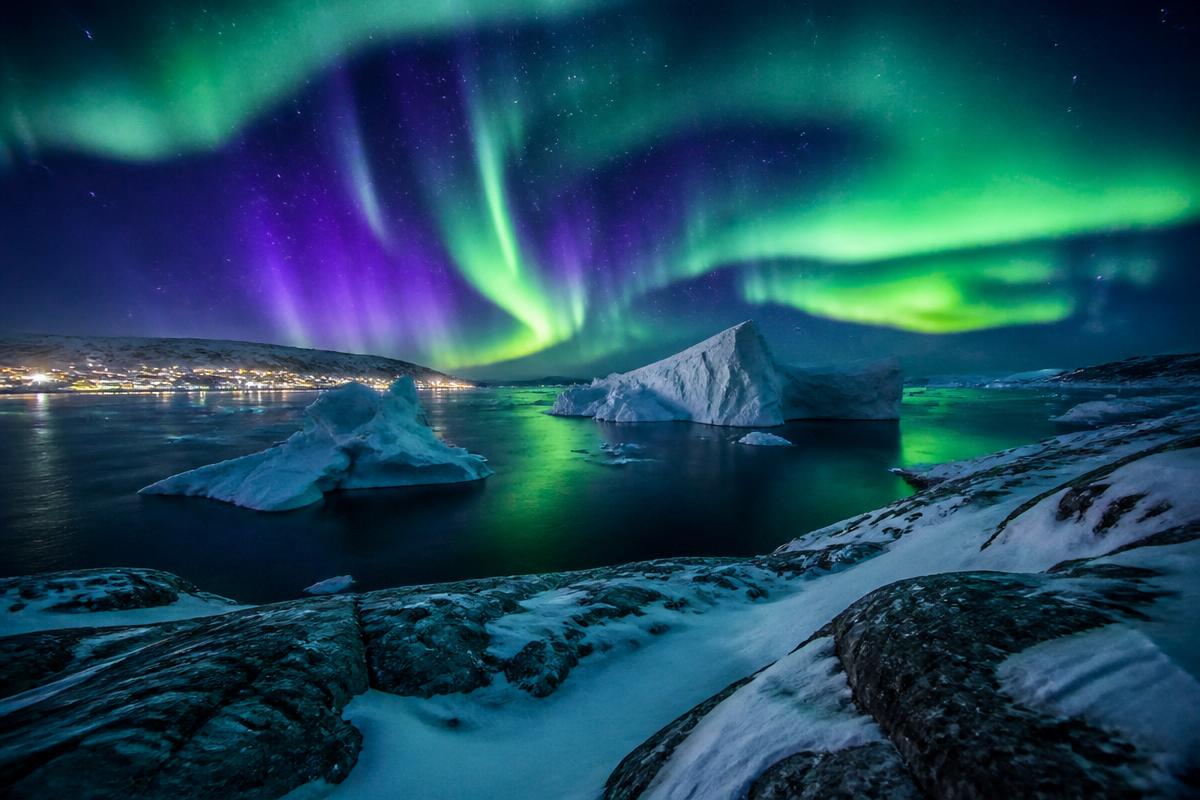
City of icebergs — long polar nights, minimal light pollution, aurora above the glaciers.
Enquire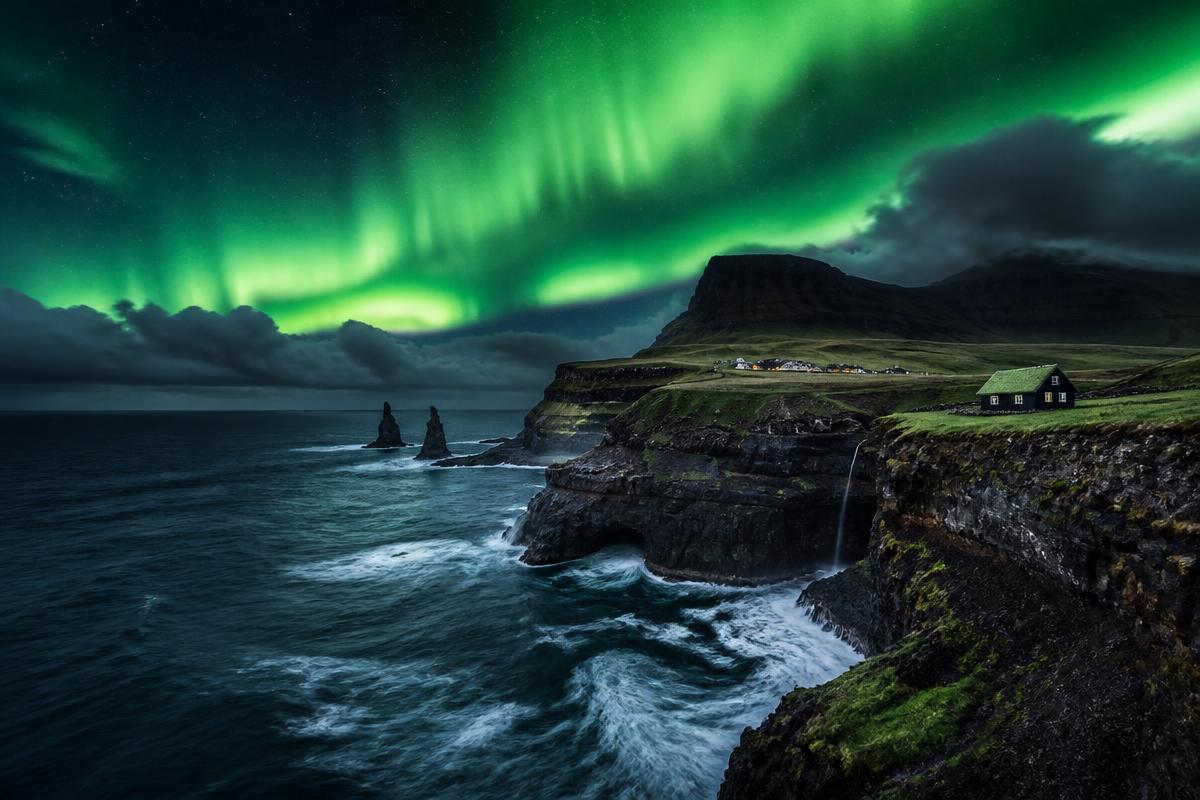
Off-the-beaten-path: sea cliffs, grass-roofed hamlets, aurora above the North Atlantic.
EnquireWhen
The aurora is active year-round, but you only see it when the sky is dark and clear enough. Here is the window we use for every Nordic trip we plan.
Late September to early April. Sept–Oct and March are warmer and offer unfrozen lakes for reflections; Dec–Feb has the longest polar night and the most chances but is colder.
Local time 21:00 – 02:00 is prime, with 22:30 – 00:30 the peak. Plan to watch for 2–3 hours.
New moon minimises light pollution; a clear or partly clear sky is decisive. We track KP index and cloud maps before departure.
How
Pick a destination sitting on the Aurora Oval — Tromsø, Abisko, Rovaniemi, Ilulissat.
Stay at least 3 nights. Three-night probability is 3x a single-night probability.
Move away from city light pollution — even a 30-minute drive helps.
Track KP index and live cloud maps; being flexible beats camping in one spot.
Dress for -20°C (heavy down, snow boots, hand warmers) so you can wait long enough for the burst.
Book a local guided hunt — they know nearby 'blue holes' and backup viewpoints, saving hours of driving.
Featured Trips
Self-drive the ring road: black-sand beaches, glacier lagoons, ice caves, and nights at aurora-friendly rural guesthouses.
View detailsFjord cruise, guided aurora chase and dog sledding — the highest-probability aurora capital experience.
EnquireSanta Claus Village plus a glass-dome hotel — watch the aurora from your bed.
EnquirePhotography
Manual mode, ISO 1600–3200, aperture f/2.8 or your widest, shutter 5–15 seconds.
Wide-angle + fast aperture (14–24mm f/2.8 is ideal); focus manually just short of infinity.
Long exposures require stability; pair with a shutter release or 2-second timer to eliminate shake.
iPhone / modern Android night modes are enough. Prop the phone still and let it expose for 10–30 seconds.
FAQ
In Aurora Oval destinations like Tromsø or Abisko, three consecutive nights typically yields > 80% probability. But no operator can guarantee 100% — the aurora is a natural phenomenon.
Cameras accumulate light on long exposure and show richer colour. To the naked eye a weak burst is pale green-grey; a strong burst shows clear green, purple and pink.
Absolutely — the Finnish glass-igloo route is especially recommended: warm, comfortable, no long outdoor waits required.
Peak season (Dec–Feb, Chinese New Year) 4–6 months ahead. Sept–Oct and March are more flexible, 2–3 months is usually fine.
-20°C down jacket, waterproof snow boots, fleece mid-layer, wool socks, gloves, hat, hand warmers. Bring spare camera batteries — cold drains them fast.
Share your travel dates, party size and preferences — our local Chinese-speaking team will craft your Nordic aurora trip.